

Said A. Ali, Researcher
INTRODUCTION
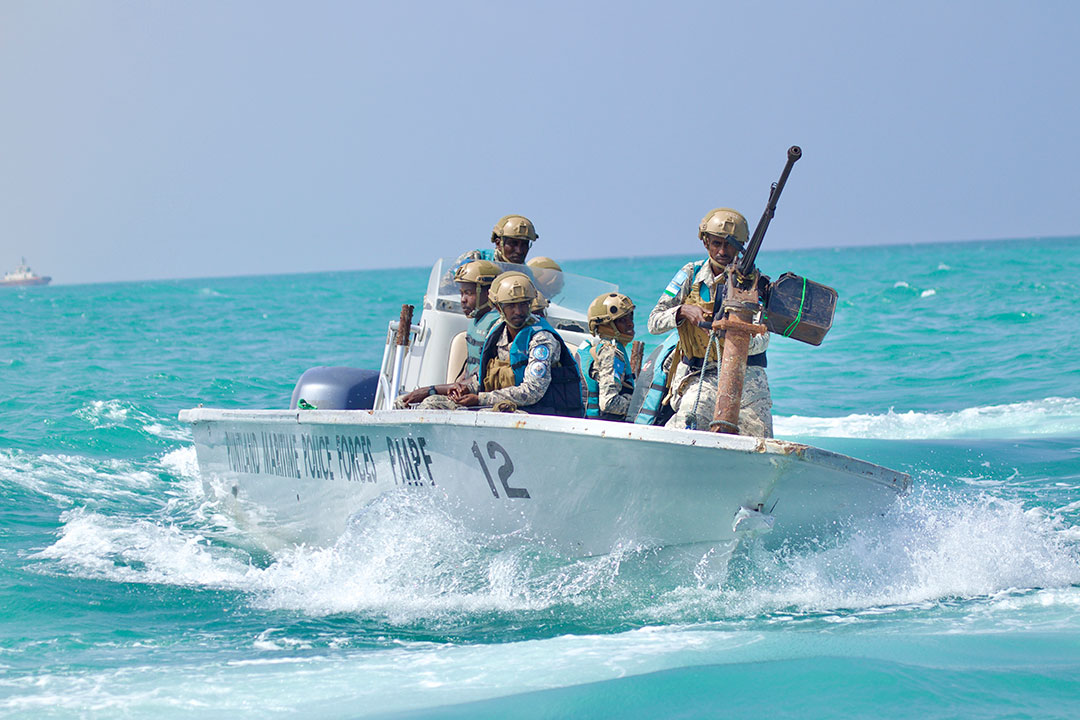
When pirates seized the oil tanker MT SIBU 1, also known as SEAMUL, off Yemen on August 20, 2026, help came not from an international navy or foreign warship, but from Puntland’s own maritime police. Within 48 hours, the tanker and its cargo were safe. The Puntland Maritime Police Force (PMPF) captured 47 pirates involved in the hijacking. One was killed, five were wounded, and 41 were detained unharmed. All 20 crew members were rescued, including 16 Indians, two Syrians, one Iraqi, and one Sudanese.
This was not the first time. In December 2012, the same force freed MV Iceberg 1, a cargo ship whose owner, Azal Shipping, went bankrupt and abandoned ransom talks, leaving the crew captive for nearly 1,000 days. Two crew members died. After a 15-day blockade, PMPF stormed the ship, losing one soldier, and brought the 22 surviving crew members home.
Fourteen years apart, these rescues point to the same lesson. local forces can deliver results when trusted to lead. Yet piracy off Puntland’s coast was allowed to fade from priority rather than being dismantled. As funding and attention shifted elsewhere, pirate attacks were rising again by 2024. That gap does not prove local forces cannot solve the problem; it shows they have rarely received sustained support. If Puntland makes maritime security a funded priority, the successes of Sibu 1 and Iceberg 1 could become lasting rather than occasional.
The Issues
Puntland’s record shows local forces can succeed when trusted to lead. What has not followed is investment commensurate with that success.
Consider Calmiskaad. Since late 2024, Puntland’s Counter Terrorism Forces have waged a sustained campaign against ISIS Somalia in the Bari mountains, known as Operation Hilaac. The US and UAE support the operation with airstrikes and logistics, but Puntland forces remain in command. The campaign has been funded and prioritized for over a year. It shows that local forces can do more than perform when given the lead, they can excel when properly resourced.
Puntland’s coastal forces, including PMPF, have not received the same commitment. Iceberg 1 and Sibu 1 are 14 years apart not because success is rare, but because piracy slid down Puntland’s priority list after the 2012–2013 crackdown. Funding and attention moved elsewhere, even though the threat remained. By 2024, piracy was rising again, and a weakened maritime force was caught off guard. That weakness was a choice, not a coincidence.
The case for local forces becomes stronger when foreign patrols are examined honestly. International navies were not built around Somalia; they follow shifting global crises, from piracy to Red Sea attacks and Gulf tensions. As attention moves, Somalia’s coast receives less coverage. Even at their busiest, foreign patrols largely deterred or intercepted threats from a distance. They did not storm hijacked ships. Puntland’s coastal forces have now done so twice, freeing vessels and crews where foreign patrols could not.
That is the advantage foreign missions cannot replicate permanence. A foreign patrol can leave when global priorities change. Puntland’s coastal forces cannot, because they have nowhere else to go. Local-led security can therefore be more sustainable than a temporary outside commitment. It depends on Puntland’s willingness to invest in the force already standing on its coast.
Still, force alone will not end piracy. Rescues like Sibu 1 and Iceberg 1 stop hijackings after they happen; they do not remove the reasons young men turn to piracy. The 2026 resurgence is rooted in instability on land, not only gaps at sea (RUSI, 2026), and UNODC argues that piracy is ultimately defeated through courts, ports, and local economies not only at sea. A properly funded coastal force can prevent hijackings and rescue crews. But lasting progress also requires courts to process captured pirates, economic alternatives for young people recruited by pirate networks, and action against illegal foreign fishing, which has pushed coastal communities toward piracy. Local forces are the most reliable security response, tackling piracy’s root causes requires more than any force can provide alone.
Conclusion and Recommendations
The record is clear. When Puntland’s local forces are trusted to lead, they deliver results. Iceberg 1 and Sibu 1 show their coastal capability. Calmiskaad shows what that capability can achieve with sustained funding. The missing piece is Puntland’s decision to close the gap between what its forces can do and the resources they receive.
Three steps follow.
First, fund coastal forces as a national priority, not an emergency response. Puntland treats counter-terrorism as a standing commitment, with predictable budgets and long-term planning. Maritime security deserves the same approach, rather than a scramble for resources after a ship is seized.
Second, ask international partners to support coastal forces as they support Operation Hilaac. The US and UAE provide airstrikes and logistics while leaving command in local hands. That model funding and equipment without foreign forces taking the lead should extend to maritime security.
Third, pair force funding with the land-based work piracy requires. Well-resourced local forces can prevent hijackings and rescue crews. Ending piracy for good also requires courts that can process captured pirates, real jobs for coastal youth recruited by pirate networks, and a serious response to illegal foreign fishing.
Puntland does not need to import security. Its forces have shown, twice and 14 years apart, that they can provide it. What remains unproven is Puntland’s willingness to fund that capability before the next ship is seized, rather than after.
References
- Hockey, C. (2026, September 23). Somali piracy in 2026 is not just a resurgence of a past problem. Royal United Services Institute. https://www.rusi.org/explore-our-research/publications/commentary/somali-piracy-2026-not-just-resurgence-past-problem
- Mbuthia, B. (2026, September 25). Somali forces recapture oil tanker seized by pirates off Puntland coast. The Eastleigh Voice. https://eastleighvoice.co.ke/regional/404830/somali-forces-recapture-oil-tanker-seized-by-pirates-off-puntland-coast
- Schuler, M. (2012, December 23). Somali pirates release crew of “Iceberg 1”. gCaptain. https://gcaptain.com/crew-of-iceberg-1-freed-by-somali-pirates/
- Schuler, M. (2011, November 4; updated December 23, 2012). The crew of MV Iceberg 1, abandoned by her owners, tortured by Somali terrorists. gCaptain. https://gcaptain.com/crew-iceberg-abandoned-owners/
- United Nations Office on Drugs and Crime. (2009). What to do about piracy? https://www.unodc.org/unodc/en/frontpage/what-to-do-about-piracy-.html
- Reuters. (2026, September 25). US-sanctioned oil tanker Sibu 1 rescued from Somali pirates. https://www.reuters.com/world/africa/us-sanctioned-oil-tanker-sibu-1-rescued-somali-pirates-2026-09-25/
- Garowe Online. (2025, December 8). Puntland deploys fresh troops to Al-Miskaad mountains as anti-ISIS offensive enters final phase. https://www.garoweonline.com/index.php/en/news/somalia/puntland-deploys-fresh-troops-to-al-miskaad-mountains-as-anti-isis-offensive-enters-final-phase
