

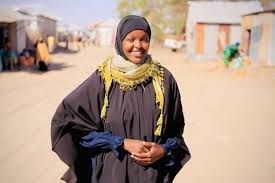
The sentencing of Somali activist Sacdiya Macalin Cali, widely known as Sacdiya Bajaj, to three years in prison has triggered widespread political backlash and intensified concerns over freedom of expression, judicial independence, and civic rights in Somalia.
Sacdiya, a young activist and tuk-tuk (three-wheeled taxi) driver from Mogadishu, gained public attention through her outspoken advocacy on issues affecting low-income workers, women, and young people in the Somali capital. She became known for criticizing inequality, economic hardship, governance failures, and the widening gap between political elites and ordinary citizens.
Her activism resonated particularly with working-class communities, where she emerged as a vocal symbol of grassroots frustration over unemployment, rising living costs, and limited economic opportunities.
The case against Sacdiya began after authorities accused her of offenses linked to public statements and political criticism directed at senior government officials. Prosecutors argued her remarks violated provisions under Somalia’s Penal Code, including Article 269(2), which formed the basis of the charges ultimately used in her conviction.
Sacdiya was detained for 74 days before the Banadir Regional Court delivered its verdict, sentencing her to three years in prison. The ruling immediately sparked sharp criticism from opposition politicians, civil society figures, and legal observers.
Her lawyer, Avv. Mohamed Sheikh, strongly challenged both the legal basis of the conviction and the severity of the sentence.
“We believed Article 269(2) was not legally established and that the Attorney General’s Office failed to present sufficient evidence,” Mohamed Sheikh said.
He also expressed concern over the court’s decision to impose the maximum penalty allowed under the law.
“The court sentenced Sacdiya to 3 years in prison — the maximum penalty allowed,” he said, adding that the defense believes the court disregarded their legal arguments and evidence.
The verdict has since drawn condemnation from several prominent Somali political figures.
Former President Mohamed Abdullahi Farmaajo described the ruling as politically motivated and warned against the use of state institutions to suppress dissent.
He called the sentence evidence of growing politicization within Somalia’s judiciary and security institutions and urged authorities to release Sacdiya.
Former President Sheikh Sharif Sheikh Ahmed similarly condemned the sentence, describing it as a warning directed at youth and critics of the government.
“The unjust three-year sentence is a message of intimidation to young people and government critics,” he said.
Former Prime Minister Hassan Ali Khaire issued one of the strongest reactions, portraying Sacdiya as a victim of systemic injustice rather than criminal conduct.
“Sacdiya Bajaj is not a criminal,” Khaire said. “She is a mother struggling to provide for her family.”
Opposition politician Abdirahman Abdishakur also strongly criticized the ruling, describing it as a troubling moment for Somalia’s justice system.
“Sacdiya’s only crime was demanding justice and equality before the law,” Abdishakur said.
He argued that the case reflects broader concerns over abuse of power, shrinking civic freedoms, and weakening judicial independence.
The Somali Federal Government has not yet issued a detailed response to the growing criticism surrounding the case.
For many observers, the Sacdiya Bajaj case has evolved far beyond an individual court ruling. It has become a major political flashpoint, raising broader questions about the limits of free expression, the independence of Somalia’s judiciary, and the treatment of citizens who openly criticize those in power.
As calls for her release continue both domestically and internationally, Sacdiya’s case is expected to remain central to ongoing debates over democracy, accountability, and civil liberties in Somalia.
